


As logistics networks expand and transit fleets modernize, even small maintenance components are gaining strategic importance. Bus and Truck Wiper blades are a clear example: they protect driver visibility, support ADAS camera performance, and help keep vehicles legally roadworthy in demanding weather. Heading into 2026, rising Class 8 truck mileage, municipal bus electrification, and data-driven maintenance programs are reshaping how fleets and distributors buy replacement blades. This article examines the demand signals, product specifications, and procurement considerations defining the commercial wiper blade market, with a focus on what fleet managers need to prioritize for safer operation and higher uptime.
Why Bus and Truck Wiper Blades Are a Strategic Fleet
Looking toward 2026, the global transportation and logistics sectors increasingly treat fleet maintenance components as critical assets for maximizing uptime and ensuring operator safety. Wiper blades stand out as a highly visible, safety-critical requirement, especially as modern fleets integrate Advanced Driver Assistance Systems (ADAS) that rely on perfectly clear windshield camera zones.
Visibility systems directly impact a vehicle's legal operation status and accident liability. The commercial vehicle sector—encompassing heavy-duty trucks, intercity buses, and municipal transit systems—demands robust solutions that far exceed passenger vehicle standards. Understanding this trajectory helps fleet managers and distributors align their procurement strategies with projected market demands.
Defining Commercial Bus and Truck Wiper Blades
Commercial wiper bladesare engineered specifically for the demanding environments of heavy-duty vehicles. Unlike standard passenger car Wipers, which typically measure between 16 and 26 inches, commercial wiper blades span from 24 inches up to a substantial 40 inches (approximately 1016mm) to clear the expansive windshields of buses and Class 8 trucks.
Furthermore, the mounting hardware is distinct. Commercial units frequently utilize heavy-duty saddle mounts—with common product-specific dimensions such as 12x4mm or 16x6mm—secured with robust screws or bolts rather than the simple J-hooks found on lighter vehicles. This structural reinforcement prevents blade chatter and detachment under the extreme wind resistance generated by large, flat windshields at highway speeds.
Key Demand Signals in the Commercial Wiper Market
Several distinct demand signals point to sustained growth in this sector heading into 2026. Based on industry projections, the expansion of e-commerce logistics is expected to significantly increase the total mileage driven by Class 8 trucks. Consequently, a typical long-haul truck operating in mixed conditions requires wiper replacements roughly two to three times annually to maintain optimal visibility.
Additionally, municipal investments in fleet electrification are expanding global bus networks, which often introduces new aerodynamic windshield designs that require specialized wiping systems. This rising operational tempo directly fuels the commercial wiper blade market, driving distributors to stock heavier, more durable product lines. The shift toward predictive-maintenance telematics also means fleet operators are increasingly replacing these components proactively based on data, rather than waiting for structural failure.
Key Specifications for Bus and Truck Wiper Blades
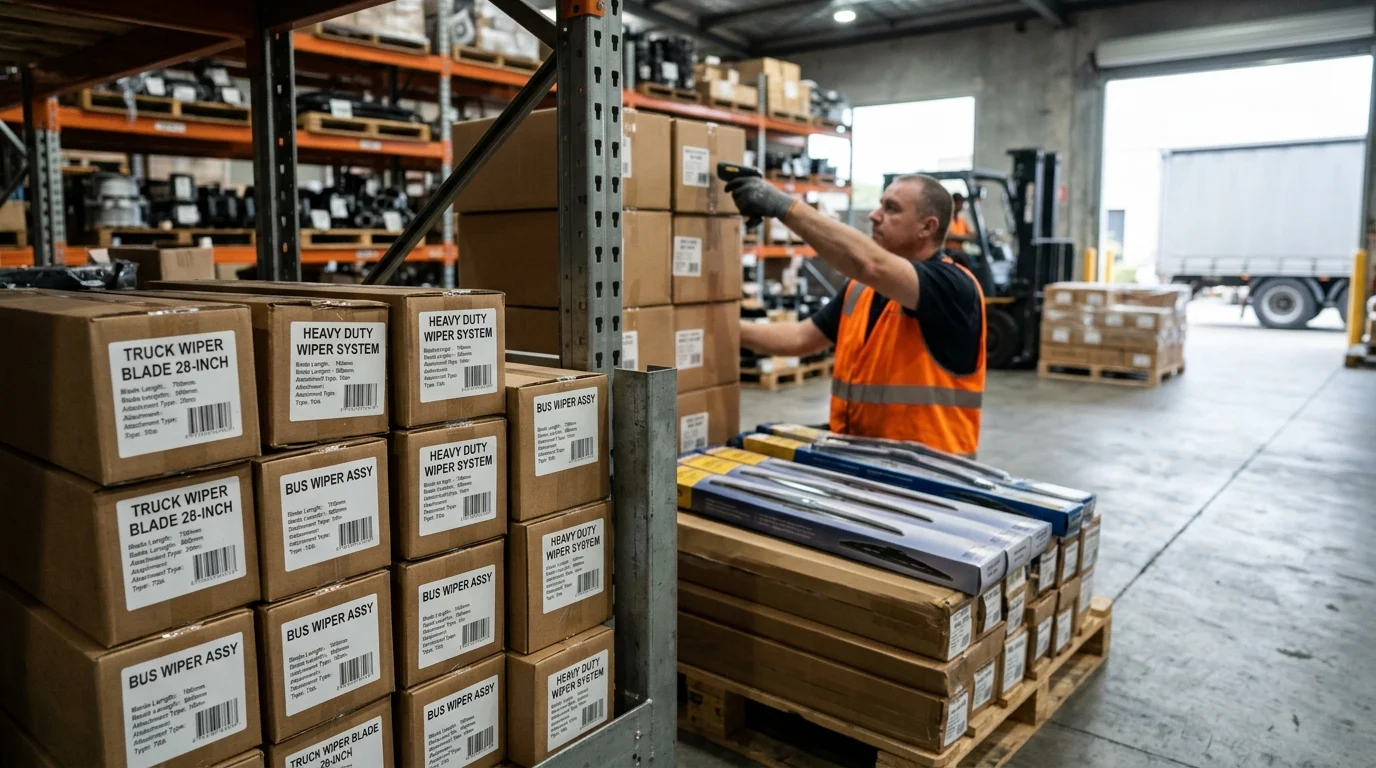
Because heavy-duty vehicles operate in conditions that rapidly degrade inferior materials, structural and material composition is a primary concern for procurement teams evaluating wiper blades.
Conventional, Beam, Hybrid, and Heavy-Duty Blade Types
The commercial sector primarily utilizes four distinct blade categories: conventional, beam, hybrid, and heavy-duty. While conventional, beam, and hybrid represent the three core structural architectures, "heavy-duty" functions as a reinforced product class rather than a fourth fundamental design. It is often treated as a distinct category in procurement catalogs because it applies a significant structural reinforcement tier to handle the immense drag coefficients of commercial vehicles.
Conventional blades feature a traditional steel frame with articulated joints, offering reliable performance for flat windshields typical of older bus models. Beam (or flat) blades eliminate the external frame, utilizing a continuous steel tension spring that conforms perfectly to curved aerodynamic windshields on modern trucks. Hybrid blades combine the aerodynamic shell of a beam blade with the structural support of a conventional frame. Heavy-duty blades utilize oversized frames and reinforced saddles to prevent failure on the largest commercial windshields.
| Blade Type | Ideal Commercial Application | Aerodynamic Performance | Estimated Lifespan (Months) |
|---|---|---|---|
| Conventional | Mixed-fleet standard duty | Moderate | 4 - 6 |
| Beam (Flat) | High-speed highway logistics | Excellent | 6 - 9 |
| Hybrid | Heavy-duty construction/mining | High | 5 - 8 |
| Heavy-Duty | Extreme drag / oversized windshields | Moderate to High | 6 - 9 |
Materials, Frame Designs, and Adapter Compatibility
Material selection is a strong predictor of a blade's service life. Premium commercial blades utilize 100% natural rubber infused with graphite or Teflon coatings to reduce friction, though high-end silicone formulations are gaining traction for their superior UV resistance. The metal framework is equally critical; while passenger car wipers use 0.8mm steel, commercial frames generally require galvanized steel with a thickness ranging from 1.2mm to 1.5mm to prevent bending.
Adapter compatibility remains a complex issue for distributors. The heavy-duty truck wiper market features a fragmented landscape of proprietary wiper arms. Successful product lines incorporate multi-adapter systems that securely fit various hooks, saddles, and heavy-duty pin arms, thereby reducing the number of unique SKUs a fleet must hold in inventory.
Operating Conditions That Accelerate Wear
Commercial wipers face an onslaught of environmental stressors that drastically accelerate wear. Continuous exposure to ultraviolet (UV) radiation causes rubber compounds to oxidize, harden, and eventually crack. In northern climates, the combination of road salt, magnesium chloride, and sub-zero temperatures can corrode metal frames and freeze articulated joints.
Mechanical wear from dry wiping is also a significant factor. Dust and silica particles from construction sites or unpaved freight yards act as an abrasive paste. Blades subjected to these harsh conditions often see their structural tension drop below optimal illustrative benchmarks (such as 1.5 to 2.0 N/cm) required for a streak-free wipe, necessitating replacement within the standard four to six-month interval.
Regulations, Fleet Standards, and Regional Market Needs
Regional regulations and fleet compliance standards dictate measurable performance, directly influencing how manufacturers design and test products.
Safety, Inspection, and Compliance Requirements
In North America, commercial vehicle visibility is strictly regulated by standards such as FMVSS 104, which mandates that windshield wiping systems must clear specific percentages of the driver's primary viewing area. Illustrative benchmarks often range from 80% to 94% depending on the zone, though specific requirements vary. Equivalent regional standards, such as UNECE regulations in Europe or GB standards in China, enforce similar performance metrics. Vehicles failing to meet these visibility thresholds during roadside inspections face immediate out-of-service orders. Because specific percentages and testing methodologies vary by jurisdiction, buyers must verify current local regulations to ensure full compliance.
To support compliance efforts, fleets often source from a global wiper blade factory operating under IATF 16949 quality management standards. This automotive-specific certification ensures that the manufacturing process includes rigorous lifecycle testing, ozone resistance verification, and tension distribution mapping.
Climate Factors That Influence Product Selection
Regional climates dictate distinct purchasing patterns. In Scandinavia and Northern Canada, fleets mandate specialized winter blades encased in flexible rubber boots to prevent ice accumulation in the frame joints. These blades must remain pliable at temperatures plummeting to -40°C.
Conversely, fleets operating in the Middle East or the American Southwest prioritize UV stabilization and high-temperature resistance. In these regions, windshield surface temperatures can easily exceed +80°C, a threshold that can severely degrade, soften, or permanently deform standard natural rubber compounds within weeks.
OEM, OES, and Aftermarket Channel Opportunities
The market is divided into Original Equipment Manufacturer (OEM), Original Equipment Supplier (OES), and Aftermarket channels. While OEM contracts secure volume during initial vehicle production, industry estimates suggest that the aftermarket accounts for roughly 75% to 80% of a commercial vehicle's lifetime wiper consumption, depending on the specific fleet lifecycle.
This dynamic creates notable opportunities for aftermarket distributors who can provide OES-quality blades at competitive price points. Fleet managers are increasingly willing to pivot away from dealership-branded replacements if an aftermarket distributor can prove equal performance and better availability.
Sourcing, Pricing, and Supply Chain Evaluation
Optimizing procurement means balancing unit costs, manufacturing lead times, and rigorous quality controls to ensure uninterrupted fleet operations. It is important to note that replacement intervals, cost breakdowns, test standards, Minimum Order Quantities (MOQs), and defect thresholds will vary by region, vehicle, supplier, and operating environment.
Comparing Supplier Quality and Reliability
Evaluating a supplier requires analyzing their production consistency. In commercial applications, a defect rate above 0.5% (5000 Parts Per Million) is generally considered unacceptable, though specific OEM thresholds may be even stricter. Premature wiper failure can sideline a commercial asset worth hundreds of thousands of dollars.
Reliable partners provide transparent testing data. While standards vary by supplier and region, common illustrative benchmarks include 240 hours in salt spray corrosion tests without red rust, and lifecycle endurance testing of up to 1.5 million wipe cycles. Working directly with a dedicated bus wiper blade supplier is one strategy to help meet these quality metrics consistently.
Cost Drivers in Rubber, Metal, Packaging, and Logistics
Understanding the Bill of Materials (BOM) helps buyers negotiate better contracts. While exact figures fluctuate based on regional supply chains, illustrative benchmark splits often model the cost of a commercial wiper blade across premium rubber compounds (roughly 30%), heavy-gauge steel framework (40%), and specialized adapters or packaging (30%). Fluctuations in global steel and synthetic rubber indices directly impact wholesale pricing.
Logistics and MOQs also play a heavy role in landed costs. Factory MOQs for custom-branded commercial blades typically range from 1,000 to 3,000 units per size. Furthermore, because wiper blades are bulky, ocean freight logistics can add an estimated 15% to 20% to the final landed cost depending on shipping routes, making efficient packaging designs a vital cost-saving measure.
Building a Commercial Wiper Blade Comparison Table
To systematize the procurement process, buyers often utilize a standardized matrix to compare potential manufacturing partners, preventing decisions based solely on the lowest unit price. Note that acceptable standards will vary based on specific operational requirements.
| Sourcing Metric | Acceptable Standard | Premium Benchmark | Red Flag Threshold |
|---|---|---|---|
| Defect Rate (PPM) | < 5000 (0.5%) | < 2000 (0.2%) | > 10000 (1.0%) |
| Minimum Order Qty (MOQ) | 1,000 - 2,000 units | 500 units | > 5,000 units |
| Production Lead Time | 30 - 45 Days | 20 - 25 Days | > 60 Days |
| Framework Thickness | 1.0mm - 1.2mm | 1.5mm Heavy-Duty | < 0.8mm |
How Fleets and Distributors Should Choose Wiper Blades
Selecting the right wiper blade is an exercise in risk management and inventory optimization.
Practical Steps for Selecting the Right Blade
The first practical step is conducting a fleet-wide visibility audit. Maintenance managers should document the specific arm types, lengths, and operational environments of every vehicle class in their yard. For instance, a transit bus navigating urban environments requires a different wiping profile than a Class 8 truck running transcontinental routes.
Once the requirements are mapped, buyers can source bulk commercial vehicle wipers that match these exact specifications. Requesting pilot samples from suppliers and running them on a small test group of vehicles for 60 days provides real-world data on chatter, streaking, and frame integrity before committing to a multi-pallet order.
Balancing Price, Service Life, and SKU Complexity
The ultimate goal is balancing unit price with service life and inventory complexity. Depending on the freight and route, industry downtime estimates suggest a sidelined vehicle can cost an operator approximately $100 per hour in lost revenue. In this context, saving a few dollars on a substandard blade is an unnecessary financial risk.
Furthermore, distributors should actively seek product lines that consolidate SKUs. By adopting multi-adapter commercial blades, a warehouse can reduce its wiper blade inventory footprint by an estimated 20% to 30%, depending on the existing SKU overlap. This consolidation frees up capital and shelf space while ensuring the right blade is always available to keep the fleet moving safely.
Key Takeaways
- Fleet operators should treat bus and truck wiper blades as safety-critical components because visibility affects legal operation, accident risk, and ADAS performance.
- Commercial wiper blades typically range from 24 to 40 inches and require stronger mounting systems than standard passenger vehicle wipers.
- Long-haul trucks operating in mixed conditions may need wiper blade replacement two to three times annually to maintain reliable visibility.
- Distributors should stock reinforced commercial blade lines as e-commerce logistics, electrified bus fleets, and predictive maintenance programs increase replacement demand.
- Procurement teams should verify blade length, saddle mount dimensions, material durability, and windshield compatibility before purchasing for heavy-duty fleets.
Frequently Asked Questions
Why are bus and truck wiper blades becoming more important for fleets in 2026?
Fleets are driving higher mileage while facing stricter safety and uptime expectations. Clear windshields also support ADAS camera visibility, making wiper blades a proactive maintenance item rather than a low-cost afterthought.
How are commercial wiper blades different from passenger car wipers?
Commercial wiper blades are longer, often 24 to 40 inches, and use reinforced structures and heavy-duty mounts such as saddle fittings. They are designed for larger windshields, higher wind resistance, and tougher operating conditions.
How often should long-haul trucks replace wiper blades?
A typical long-haul truck operating in mixed weather may need wiper blade replacement two to three times per year. Fleets should adjust schedules based on climate, mileage, inspection results, and driver feedback.
What specifications should buyers check before ordering bus or truck wiper blades?
Buyers should confirm blade length, mount type, saddle dimensions, material quality, windshield curvature, vehicle model compatibility, and operating environment. Heavy-duty fitment accuracy reduces chatter, streaking, and premature failure.
Why does ADAS increase demand for high-quality wiper blades?
ADAS sensors and windshield cameras need a clean field of view to function reliably. Poor wiping performance can interfere with safety systems, increase driver risk, and create maintenance or liability concerns for fleet operators.